

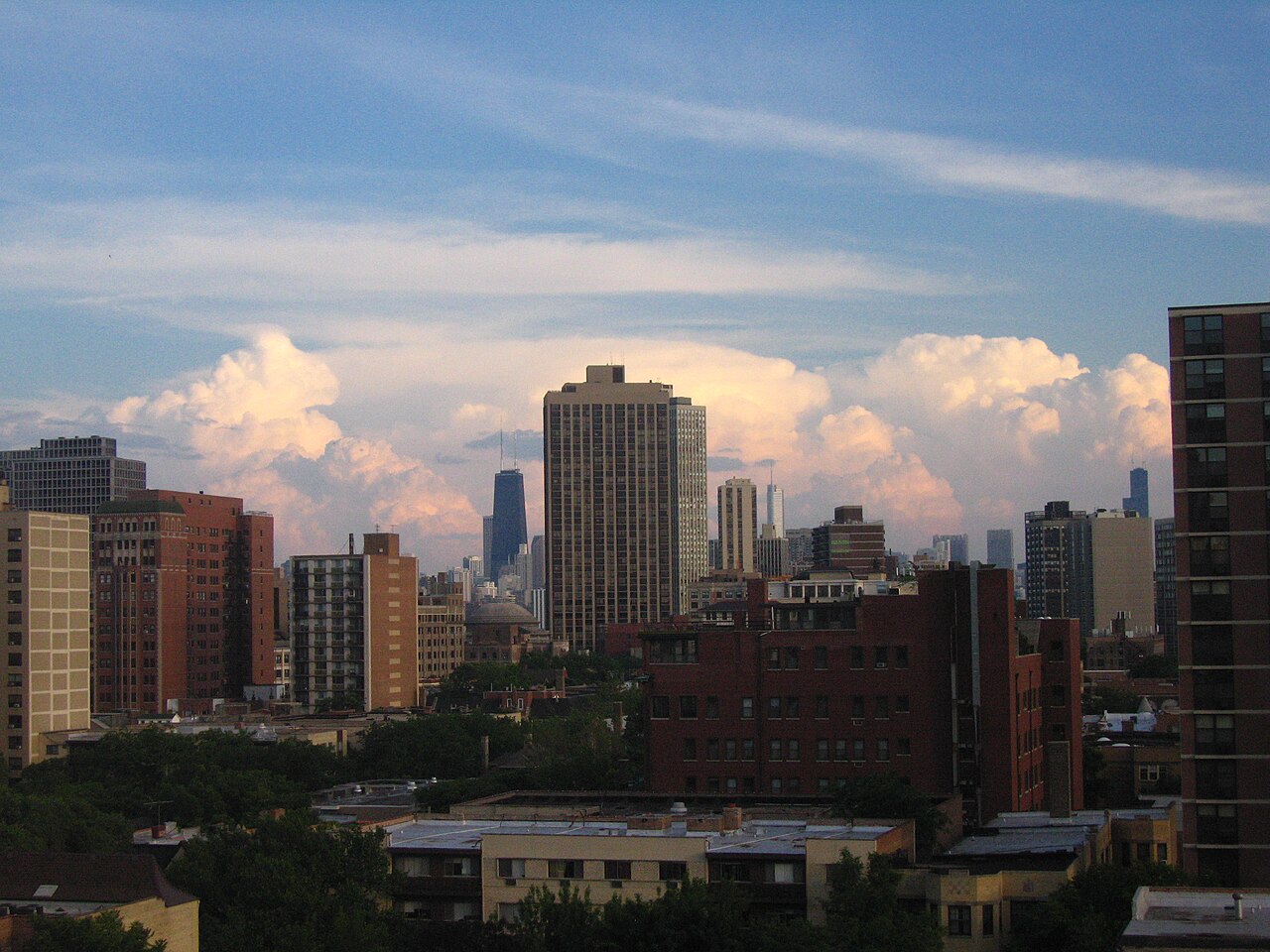
The most revealing architecture trips move between scales. A skyline explains a city’s outline; a doorway, courtyard or station shows how that outline works for the people who live there. Between the landmark buildings are streets where different periods and ideas meet.
These seven cities offer rewarding starting points for looking more closely. Choose a small area for each walk, research any interiors you hope to enter, and spend some time viewing buildings from public space. An exterior visit can be interesting in its own right, while a guided tour can explain decisions that photographs leave invisible.
Toronto: a different view of the art school
The Sharp Centre for Design at OCAD University makes a memorable study in contrast: its patterned, elevated volume sits above the older campus buildings on colourful supports. Begin with the university’s account of the Sharp Centre so the building’s role is part of the visit, alongside its striking appearance.
Walk around the surrounding streets before deciding on a favourite viewpoint. Looking at how an unusual building meets its neighbours is often more revealing than finding the angle that makes it seem entirely separate from the city.
Copenhagen: design at the scale of everyday life
Copenhagen rewards attention to the spaces between buildings as much as the buildings themselves. A useful first stop is the Danish Architecture Center, where exhibitions and guided experiences provide context for exploring the city. Use its current programme to choose a theme that matches your interests.
Then take that theme outside. Notice thresholds, places to sit, connections to the water and the way a route accommodates different uses. These observations turn a general admiration for Scandinavian design into questions you can test on an ordinary street.
Barcelona: buildings that ask you to slow down
Barcelona offers an unusually rich conversation between architecture, craft and the street. The Sagrada Família’s official site is the place to understand the basilica and arrange a visit. Its changing construction and visitor arrangements make current information more useful than an old timetable or an assumed completion date.
For a broader architectural walk, compare one carefully studied landmark with the surrounding urban fabric. Look at balconies, courtyards and the repetition of blocks. The contrasts help explain why a singular building has such a strong effect on its setting.
New York: a city seen from street level
New York’s towers can dominate the imagination before a visit. Bring the view closer by choosing one architectural destination, such as the Solomon R. Guggenheim Museum, and giving yourself time to consider the approach, entrance and circulation as well as the silhouette.
Afterwards, walk a manageable stretch of the surrounding city. Compare the scale of a museum with that of housing, shops and public space. A skyline photograph brings buildings together; a walk reveals the distances, transitions and everyday uses that the photograph compresses.
Sydney: architecture beside the harbour
Jørn Utzon’s Sydney Opera House is inseparable from its setting at Bennelong Point. The Opera House’s own history explains both the design and the difficult process that brought it to completion. Its opening in 1973 is part of that history; the building remains an active performing-arts venue.
Explore different harbour viewpoints before taking a tour or attending a performance. Seeing the building from the water’s edge and then encountering its public spaces gives you more than a single view of its familiar roof forms.
Berlin: look for the layers
Berlin’s interest lies partly in the close proximity of different architectural periods and political histories. The Bundestag’s visitor information is essential if a visit to the Reichstag dome is part of your plans: registration and access arrangements should be checked before arrival.
Keep the rest of the walk open enough to notice changes in material, street width and building type. Avoid trying to explain the whole city through one landmark. A few well-chosen stops, read in their surroundings, make a stronger introduction to its complexity.
Chicago: read the skyline from more than one angle
Chicago makes a compelling place to connect a love of skylines with an interest in how buildings are designed. The Chicago Architecture Center offers exhibitions and tours that can provide a framework for looking at the city’s architectural history.
Combine that context with your own walk beside the river or lake. Change your distance from the buildings and notice how their proportions change: what reads as a narrow line from far away may become a substantial structure at street level. The best souvenir of an architecture trip is often a new way of looking.
