

A bridge has an unusually clear job, yet the ways of doing it can be wonderfully different. Stone towers, steel cantilevers and slender cables all connect places while changing the landscape around them. Some are enjoyed on foot; others are best appreciated from a separate public viewpoint.
This selection brings together fifteen distinctive structures. It is an architectural journey rather than a ranking by size or height. Before visiting, check the relevant operator’s current access information. A road or railway bridge appearing here does not mean it has a public footway, and a dramatic photograph is never a reason to stop outside a permitted viewing area.
1. Brooklyn Bridge, New York
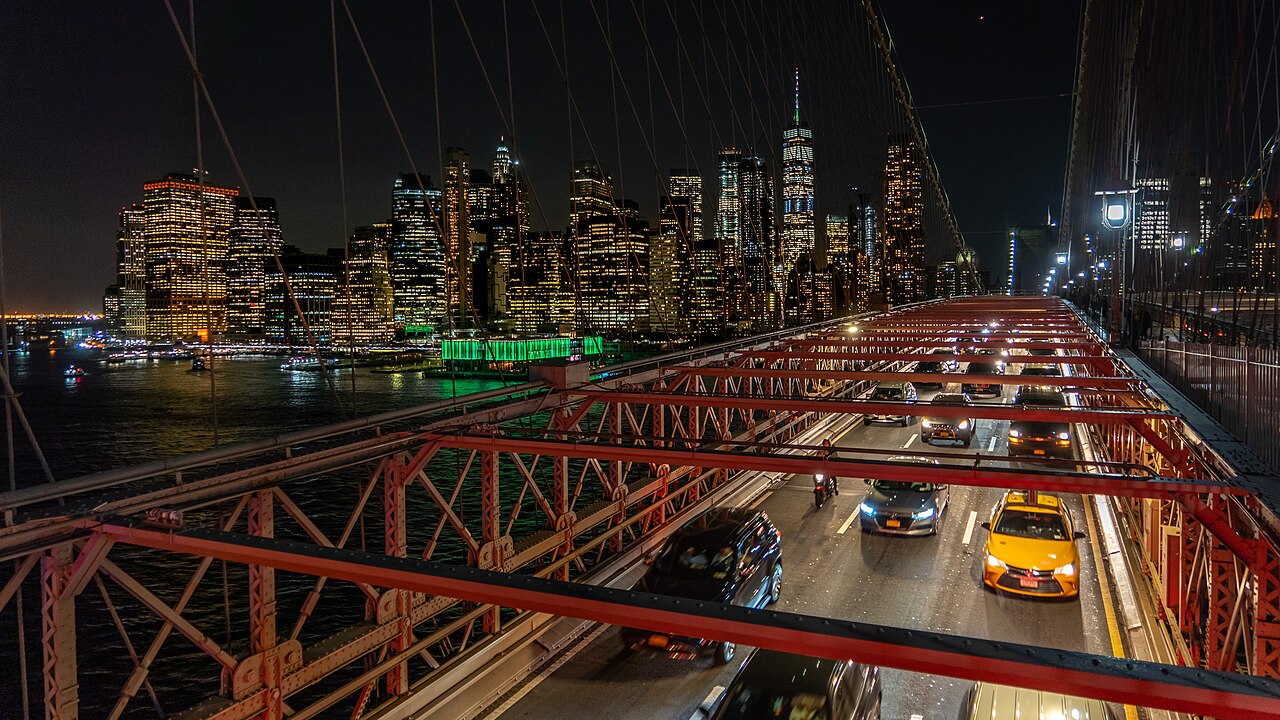
The stone towers and web of suspension cables give the Brooklyn Bridge a powerful presence both from the waterfront and from the bridge itself. New York City’s transport department distinguishes its pedestrian promenade from the protected bicycle path. Use the appropriate route and keep space for people travelling through: this landmark is also everyday infrastructure.
2. Millau Viaduct, France
Slender piers lift the Millau Viaduct across the Tarn valley in southern France. The contrast between the structure’s light appearance and the scale of the crossing is its great visual surprise. Use the viaduct’s official visitor information to find designated viewing opportunities rather than treating the motorway as a place to pause.
3. Helix Bridge, Singapore
The Helix Bridge makes a pedestrian crossing into an encounter with structure. Curving steel members wrap around the route, with the surrounding Marina Bay skyline providing a very different scale. Look along the bridge as well as across the water: repeated details are part of what makes the walk interesting.
4. Millennium Bridge, London
The Millennium Bridge gives the Thames a deliberately slender pedestrian crossing. Its low profile is particularly striking beside London’s more massive historic bridges. The City Bridge Foundation provides the bridge’s story. Take time at either end to see how the crossing connects two very different stretches of riverside.
5. Rainbow Bridge, Tokyo
Tokyo’s Rainbow Bridge spans part of the city’s working waterfront, so its setting is as important as its silhouette. The long suspension crossing makes a strong contrast with the dense urban landscape behind it. Plan a view from an established public waterfront area and check current arrangements separately if you intend to use a pedestrian route.
6. Navajo Bridge, Arizona
At Marble Canyon, two bridges place different periods of engineering beside the same immense landscape. The National Park Service’s Navajo Bridge guide explains the historic and newer crossings. The canyon gives the structures their scale; use the designated visitor areas and keep well back from unprotected edges.
7. San Diego–Coronado Bridge, California
The San Diego–Coronado Bridge curves across the bay on a sequence of tall supports. From the shoreline, the changing line of the deck makes the connection between the two sides especially clear. Treat it as a road bridge and plan your viewing stop on land, away from moving traffic.
8. Tower Bridge, London
Tower Bridge combines an immediately recognisable historic appearance with the engineering needed for a working river crossing. Its official visitor site separates the exhibition experience from everyday passage across the bridge. Choose the visit that interests you, and check current arrangements if you hope to see the bascules lift.
9. Octávio Frias de Oliveira Bridge, São Paulo
The cable-stayed Octávio Frias de Oliveira Bridge adds a distinctive crossed form to São Paulo’s skyline. Its roads and cables make a complex composition, particularly when seen from some distance. Appreciate that design from an established public location; an architectural interest in a bridge does not create pedestrian access to its traffic lanes.
10. Pennybacker Bridge, Austin
Also known as the Loop 360 Bridge, the Pennybacker Bridge crosses the Colorado River in Austin. Its steel arch and the surrounding hills make the relationship between structure and setting easy to see. For a visit, distinguish a lawful public viewpoint from an informal roadside stopping place, and plan parking before setting out.
11. Széchenyi Chain Bridge, Budapest
The Chain Bridge links Buda and Pest across the Danube, with stone towers anchoring its suspension structure. Look at it both as a single object and as part of the riverfront: the approaches help explain the role of the crossing in the city. Check local transport information for the current arrangements affecting your journey.
12. Hangzhou Bay Bridge, China
Hangzhou Bay Bridge is a road connection across a broad coastal bay in Zhejiang. Its effect is different from a short crossing framed by city buildings: the water and long horizon are central to the experience. Any visit needs to use authorised facilities and transport arrangements, with viewing kept separate from highway traffic.
13. Golden Gate Bridge, San Francisco
The Golden Gate Bridge brings towers, suspension cables and a strong colour into a dramatic coastal setting. Its appearance changes with the fog and the position of the sun. The bridge district’s visitor guide is the best starting point for current pedestrian, cycling and transport information before choosing your approach.
14. Henderson Waves, Singapore
Henderson Waves takes a more intimate approach to bridge design. Its wave-like form makes a pedestrian route into a place to look closely at curves, shade and the landscape around it. Plan it as part of a walk, checking the park authority’s current route information before relying on connections to other paths.
15. Forth Bridge, Scotland
The Forth Bridge’s great steel cantilevers give the railway crossing a character quite different from a suspension bridge. Its engineering importance is recognised in UNESCO’s World Heritage inscription. Enjoy it from the surrounding public waterfront: the railway structure itself is not a pedestrian crossing.
