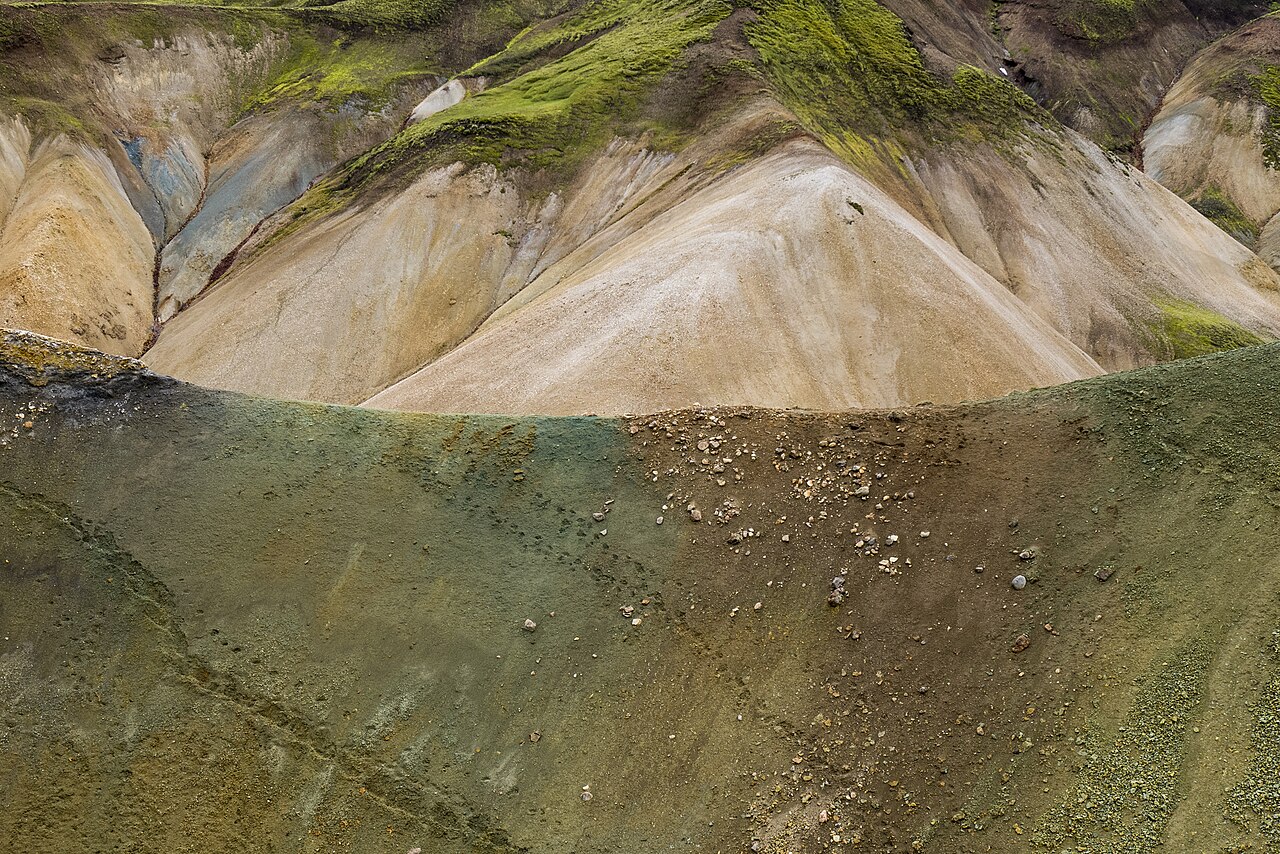


Extraordinary landscapes become even more compelling when their forms begin to make sense. Cooling lava can split into columns; water can dissolve a limestone plateau; evaporation can transform the appearance of a lake.
These ten places and phenomena are an invitation to look closely. They span very different environments, so the practical experience of seeing them varies from a managed boardwalk to a remote mountain setting. Photographs alone cannot tell you which conditions apply.
Badlands National Park, United States
Layered rock, sharply eroded ridges and grassland meet in South Dakota’s Badlands. The National Park Service connects those landforms with fossils, prairie ecology and changing weather. A drive reveals their scale, while a designated trail brings the textures closer. Check the park’s current conditions before setting out, and keep a respectful distance from wildlife rather than approaching for a photograph.
Giant’s Causeway and Staffa, United Kingdom
The Giant’s Causeway in Northern Ireland and Staffa in Scotland both show the striking shapes produced as basaltic lava cooled and contracted. The National Trust and National Trust for Scotland explain their separate settings. The resemblance is geological, while the experiences differ: one is a coastal visitor site and the other an island reached by boat, where sea conditions affect access.
Chocolate Hills, Philippines
Bohol’s rounded hills take their familiar name from the brown grass that can appear during drier periods. UNESCO’s Bohol Island Geopark account places the hills within the island’s wider geological story. Their repeated shapes are most easily understood from an established viewpoint. Seasonal colour changes mean the scene may be green rather than chocolate brown when you arrive.
Penitentes in the high Andes
Penitentes are closely packed blades of snow or ice associated with cold, dry, high-altitude environments. Researchers at the University of Colorado describe the role of sublimation in creating these forms. They belong here as a natural phenomenon rather than a conventional attraction with an entrance gate. Their occurrence should not be confused with the hot desert floor of Death Valley, and approaching high mountain ice requires appropriate expertise.
Sossusvlei, Namibia
Red dunes surround pale pans in the Namib-Naukluft landscape. Namibia’s tourism authority introduces this desert region and the places within it. Sossusvlei and nearby Deadvlei are distinct pans, often combined in photographs and itineraries. Heat, sand and the distance between services make preparation important; use the park and your accommodation’s current access guidance rather than assuming every road is suitable for an ordinary car.
Shilin, China
The Stone Forest near Kunming is a limestone landscape shaped by dissolution and erosion. UNESCO’s South China Karst description places Shilin within a much larger group of karst environments. Paths among the stone pinnacles reveal a different scale from the broad viewpoints. These are not petrified trees: the forest comparison describes their appearance rather than their origin.
Wai-O-Tapu, New Zealand
Mineral colours, steaming water and geothermal activity give Wai-O-Tapu its distinctive appearance. The official operator explains the visitor routes and features of the site. The colours are a reason to observe closely, never an invitation to touch or enter the water. Stay on the managed paths and follow instructions around an active geothermal environment.
Cappadocia, Türkiye
Soft volcanic deposits have been shaped by erosion into valleys and pinnacles, then adapted by people into homes, churches and other spaces. UNESCO treats Göreme and the surrounding rock sites as both a cultural and natural landscape. Seeing the formations alongside the carved interiors makes the relationship especially clear. Avoid entering unmarked cavities or climbing fragile features for a better angle.
Spotted Lake, Canada
As water evaporates, this mineral-rich lake near Osoyoos can take on a pattern of rounded pools. It is also a place of cultural importance to the Syilx Okanagan people. The Okanagan Nation Alliance explains its significance and restricted access. Appreciate the view from outside the gate, and respect the site rather than walking onto the lake bed or treating it as a swimming spot.
Wulingyuan, China
Tall sandstone pillars rise through wooded valleys in Hunan’s Wulingyuan scenic area. UNESCO identifies quartz sandstone columns, ravines and other features across the protected landscape. The distinction from Shilin matters: these are different rocks and processes, despite the shared impression of a stone forest. Plan time for the distances between viewing areas, and let cloud and mist be part of the experience.